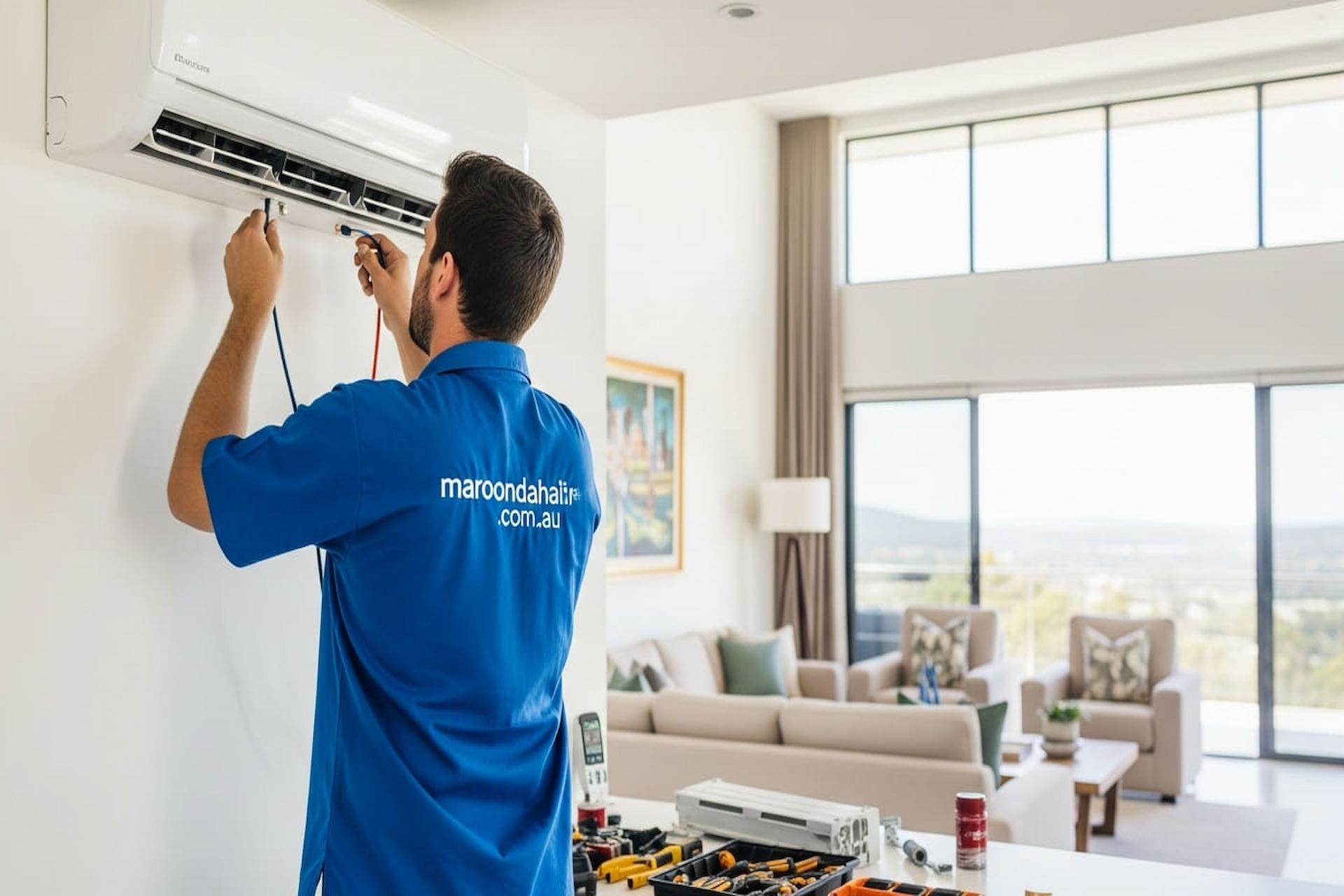
You’ve probably walked into a friend’s house in summer and felt that perfect cool blast coming from one wall. That’s a split system doing its job properly. Yet walk into three other houses in Ringwood or Croydon and you’ll feel cold air dumping straight onto the couch, or hear the outdoor unit roaring like a lawnmower next door. Same brand, same size unit — completely different results. The difference is almost always the split system installation.
The Five Biggest Split System Installation Mistakes Melbourne Homes Make
1. Putting the indoor unit in the wrong spot
The number one mistake we see every week: mounting the head unit directly above the couch or bed. You end up with ice-cold air blowing straight onto your head while the rest of the room stays warm. Or the unit is hidden behind a curtain and half the cool air gets trapped.
The sweet spot is usually high on a wall that lets the air throw across the longest part of the room, not straight down onto where people sit or sleep.
2. Choosing the shady side myth
Everyone wants the outdoor unit “in the shade” thinking it works better. Truth is, in Melbourne’s climate, good airflow matters far more than shade. We’ve seen units stuck behind lattice or in tiny alcoves that overheat every January because leaves and dust can’t escape. North side, west side, full sun — none of that matters if the unit can breathe.
3. Running the pipes the long way
Some installers take the shortest path through your walls, which often means the pipes end up going the long way around the outside of the house. Every extra metre of piping reduces efficiency and adds unnecessary strain on the compressor. The best split system installations keep pipe runs under seven metres when possible.
4. Skipping the proper bracket or slab
Watching an outdoor unit wobble on a flimsy plastic pad or cheap wall bracket during a windy Melbourne southerly is heartbreaking. Vibrations kill compressors. A solid concrete slab or heavy-duty wall bracket properly bolted to brickwork is non-negotiable.
5. Forgetting drainage altogether
We still see brand-new split systems dripping water down rendered walls because no one bothered to run the condensate drain properly. In Melbourne’s damp winters, poor drainage leads to mould inside the wall cavity. A proper fall to the drain and a trap stops smells coming back into the room.
Single Zone or Multi-Head — What Melbourne Homes Actually Need
Most three-bedroom homes in Heathmont, Mitcham or Wonga Park do perfectly fine with one decent-sized split system in the living area plus smaller units in the main bedroom and maybe the kids’ rumpus. Trying to cool the whole house with one big unit rarely works — the bedrooms stay hot while the kitchen freezes.
Multi-head systems (one outdoor unit running three or four indoor heads) have become incredibly popular in the last five years because they save space outside and give proper zoning.
The Melbourne Summer Reality Check
When the temperature hits 42°C in February, a badly installed 5kW split system will struggle to keep a normal lounge room under 30°C. A correctly installed 7 or 8kW unit with good airflow will hold 23°C without breaking a sweat. Size matters, but correct split system installation matters more.
Rules You Can’t Ignore in Maroondah, Whitehorse and Knox
The outdoor unit has to be at least one metre from the neighbour’s boundary unless you have written agreement.
If you’re in a bushfire-prone area (most of Ringwood North and Warranwood), the outdoor unit needs proper ember protection.
Heritage overlays in parts of Croydon and Vermont can restrict where you place the outdoor unit if it’s visible from the street.
All electrical work must be done by a licensed electrician and you get a certificate of electrical safety — no exceptions.
Questions and Answers: Common Questions About Split System Installation in Australia
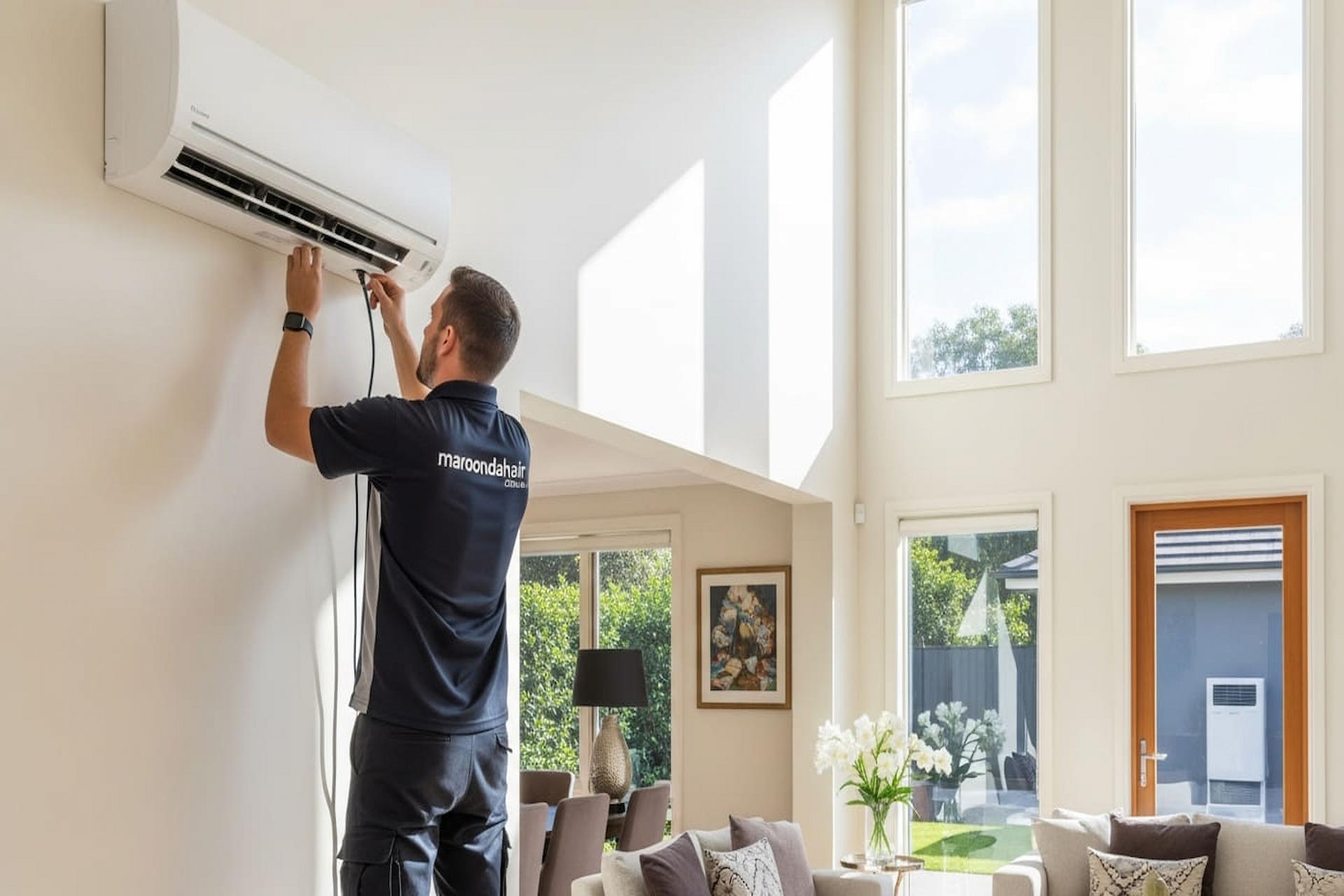
Q: Can I install the split system myself to save money?
No. Australian law requires refrigeration handling and electrical work to be done by licensed trades. Even if you somehow manage it, your warranty becomes void the moment the manufacturer finds out.
Q: How long should a proper split system installation take?
A straightforward single split in an easy-access single-storey house takes a good crew four to five hours. Multi-head or double-storey homes with roof space access usually take a full day. If someone says they’ll do it in two hours, run.
Q: Will council knock on my door if I put the outdoor unit on the footpath side?
Only if the neighbour complains or it blocks access. But in most eastern suburbs streets, putting it on the front wall is asking for trouble. Side or back is always safer.
Q: Do I really need the concrete slab under the outdoor unit?
Yes. Plastic feet sink into soft ground after the first winter, the unit goes off level, pipes crack, and you’re up for repairs within three years.
Q: Is it worth paying extra for the better wall bracket that reduces vibration?
Absolutely. The small upfront cost saves the compressor and stops the low-frequency hum that drives neighbours crazy on still summer nights.
Conclusion: Your Path to a Successful Split System Installation in Australia
Treat the installation with the same respect you give the choice of unit itself. Spend time planning where the indoor head goes so it actually cools the room evenly. Put the outdoor unit where it gets airflow, not just where it’s convenient. Keep pipe runs short. Use proper mounting and drainage.
Do those things and your split system will cool perfectly for the next fifteen years, stay quiet, and cost less to run than your kettle.
Get it wrong and you’ll be one of those homes where people say “yeah, we’ve got air con… but it doesn’t really work properly.”
The difference between the two outcomes comes down to one morning of proper split system installation. Make sure yours is done right the first time — your summer self will thank you when Melbourne decides to cook again.