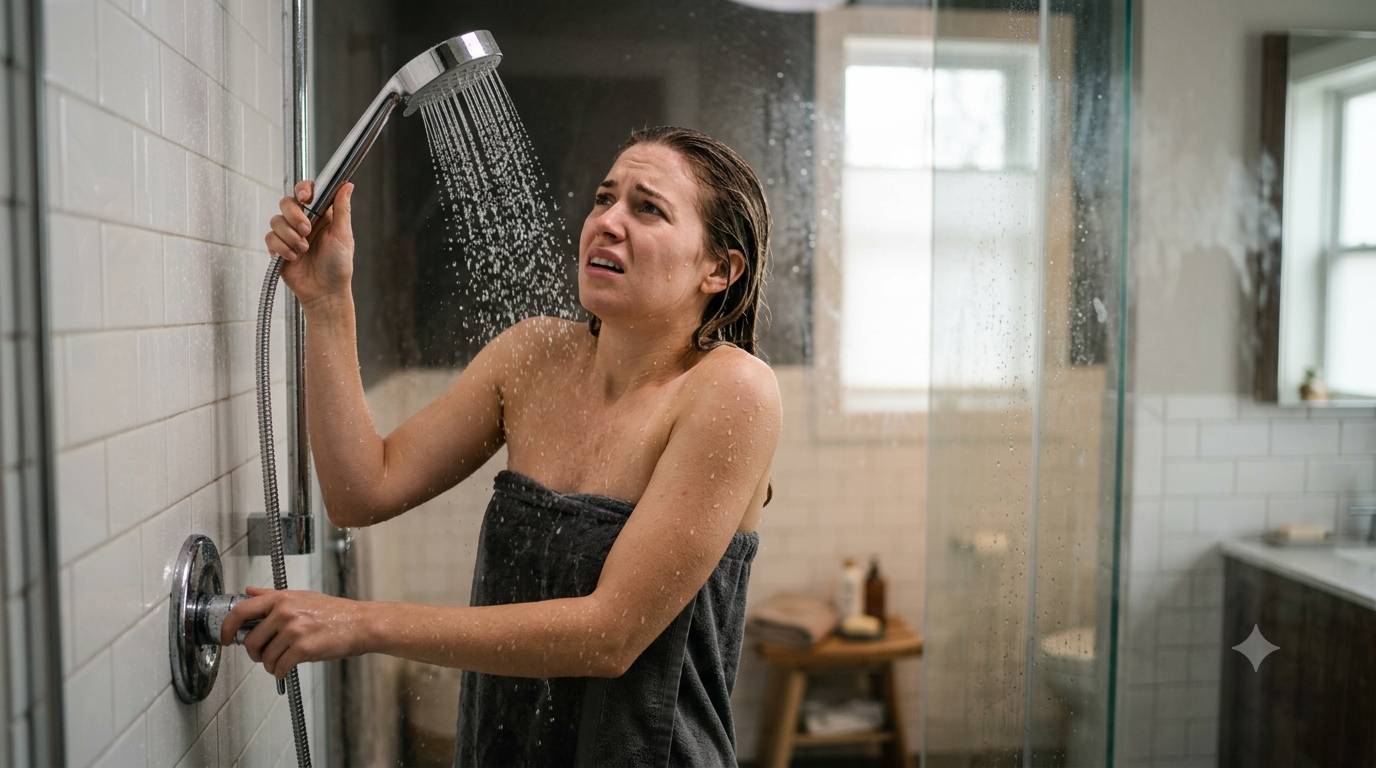
You turn on the shower expecting hot water, but it never really gets warm. Maybe it starts hot and then turns cold a few minutes later. If the hot water is working fine at your kitchen or bathroom sink, the problem may be somewhere in the shower itself. In many cases, solving hot water troubles quickly starts with finding out where the problem is coming from.
There are a few common reasons this can happen. A worn-out shower cartridge, a faulty mixing valve, mineral buildup, or a problem with the water heater can all affect the temperature of your shower. Knowing what to look for can make it easier to figure out what needs to be fixed.
1. A Faulty Shower Mixing Valve
One of the most common causes of a shower that won’t produce hot water is a problem with the mixing valve. This valve controls how much hot and cold water enters the shower, allowing you to adjust the temperature.
Over time, internal parts can wear out, become damaged, or get stuck. When that happens, the valve may allow too much cold water through, even when you turn the handle toward the hottest setting.
A faulty mixing valve can also cause inconsistent water temperatures. You might get hot water for a few minutes before it suddenly becomes lukewarm or cold.
If the sinks and other fixtures still produce plenty of hot water while the shower does not, the mixing valve is worth checking.
2. The Shower Cartridge May Be Worn Out
Many modern showers use a cartridge inside the handle assembly to regulate water temperature and flow. The cartridge moves as you turn the handle, controlling the balance between hot and cold water.
Mineral deposits, corrosion, and normal wear can eventually affect how the cartridge works. A damaged cartridge may prevent hot water from flowing properly, even though the rest of your plumbing system is working normally.
Signs of a cartridge problem can include:
- Water that never gets properly hot
- Temperature changes while you’re showering
- A handle that feels stiff or difficult to turn
- Reduced water flow
- Dripping from the shower handle
Replacing the cartridge can sometimes resolve the problem, but identifying the correct replacement and accessing the internal components may require some plumbing experience.
3. The Shower’s Temperature Limiter Is Set Too Low
Some shower valves include an anti-scald or temperature-limiting device. Its purpose is to prevent the water from becoming dangerously hot, which can help reduce the risk of burns.
However, the limiter can sometimes be set too low. If it has been adjusted incorrectly or moved during previous maintenance, the shower may not reach the temperature you expect.
This can be particularly confusing if hot water is available elsewhere in the house. Your water heater may be working normally, but the shower’s valve could be restricting how much hot water reaches the fixture.
Before making adjustments, check the manufacturer’s instructions for your particular shower valve. Incorrectly changing the temperature limit can create a scalding hazard.
4. Mineral Buildup Is Restricting Water Flow
Hard water contains minerals such as calcium and magnesium. Over time, these minerals can build up inside plumbing components, showerheads, cartridges, and valves.
When buildup affects the shower valve or cartridge, it can interfere with the movement of internal parts and restrict water flow. In some cases, this can affect the balance between hot and cold water.
A clogged showerhead can also reduce overall water flow, although that doesn’t necessarily mean the shower is actually losing its hot water supply.
If you notice white or chalky deposits around the showerhead or other fixtures, mineral buildup could be contributing to the issue. Cleaning or replacing affected components may help, depending on where the buildup has occurred.
5. There May Be a Plumbing or Water Heater Problem
Sometimes the shower is not the source of the problem. A plumbing issue elsewhere in the home can affect hot water availability.
For example, a water heater that isn’t heating properly may produce less hot water than usual. If multiple faucets are producing lukewarm or cold water, the water heater becomes a more likely suspect.
Possible water heater problems can include a failed heating element in an electric unit, a burner issue in a gas model, thermostat problems, sediment buildup, or other component failures.
There can also be issues with the plumbing that carries hot water from the heater to your fixtures. Leaks, damaged pipes, or other problems may affect the amount of hot water reaching certain parts of the home.
How to Tell Where the Problem Is
Before calling a plumber, you can do a simple check to narrow down the cause.
Turn on the hot water at a nearby sink and let it run for a moment. If the sink produces consistently hot water but the shower remains cold, the problem is more likely to be within the shower fixture, valve, or cartridge.
If several fixtures throughout the home aren’t producing hot water, the water heater or broader plumbing system may be responsible.
It’s also useful to pay attention to when the problem started. A shower that suddenly loses hot water may have a failed component, while gradually declining temperature can point toward wear, mineral buildup, or a developing water heater problem.
When Should You Call a Plumber?
A shower that won’t produce hot water isn’t always an emergency, but it shouldn’t be ignored if the problem persists. Trying to disassemble a shower valve without knowing what you’re doing can damage internal components or create leaks behind the wall.
Professional help is especially sensible if you notice leaking around the shower handle, unusual water pressure, multiple fixtures losing hot water, or signs that your water heater isn’t working correctly.
A plumber can inspect the shower valve, cartridge, temperature control, and related plumbing to determine why the hot water isn’t reaching the shower.
Conclusion
A shower that suddenly loses hot water can have a surprisingly simple cause, particularly when hot water is still available from other fixtures. A faulty mixing valve, worn cartridge, incorrectly adjusted temperature limiter, mineral buildup, or a larger plumbing or water heater problem can all affect shower temperature.
Checking other fixtures can help you determine whether the issue is isolated to the shower or part of a larger problem. If the cause isn’t obvious or the problem continues, having the plumbing professionally inspected can help identify the issue before it becomes more complicated.