
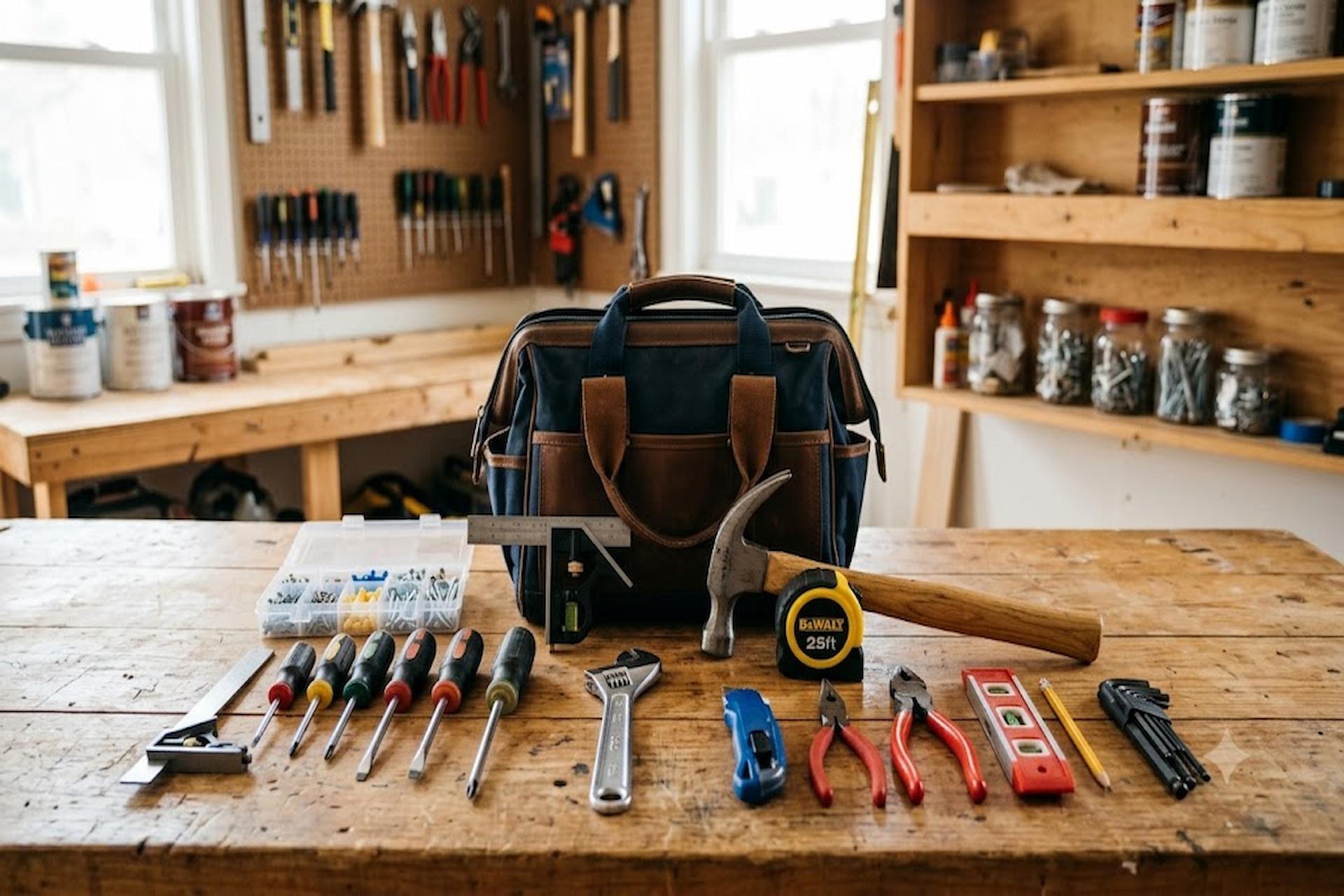
Whether you’re tightening a loose cabinet hinge, hanging shelves, fixing a dripping tap, or repairing damaged trim, the right tools make every home repair easier. A well-planned home repair tool kit doesn’t need to be expensive or packed with specialist equipment. Instead, it should include reliable essentials that help you tackle common maintenance jobs safely and efficiently.
The good news is that you don’t have to buy everything at once. Building your toolkit gradually allows you to invest in quality tools while avoiding unnecessary purchases. With a thoughtful selection of hand tools, power tools, measuring equipment, safety gear, and repair supplies, you’ll be prepared for most everyday household repairs.
This guide explains the essential tools every homeowner should own, how to choose them wisely, and how to keep them organised for years of dependable use.
Why Every Homeowner Needs a Basic Tool Kit
Home repairs are inevitable. Over time, fixtures loosen, furniture needs adjustment, walls require patching, and appliances may need minor maintenance. Having the proper tools nearby offers several advantages:
- Saves money on simple repairs
- Reduces waiting for professional assistance
- Improves repair quality
- Makes DIY projects more enjoyable
- Encourages regular home maintenance
- Helps prevent small issues from becoming costly repairs
Even beginners can complete many basic tasks with a few dependable tools and some patience.
Essential Hand Tools
Hand tools form the foundation of every home repair kit. They are versatile, affordable, and suitable for countless household jobs.
Claw Hammer
A claw hammer is useful for:
- Driving nails
- Removing nails
- Light demolition work
- Hanging pictures
- Building simple wooden projects
Choose a comfortable handle with good balance rather than simply selecting the heaviest option.
Screwdriver Set
Modern homes use many different screw types, making a complete screwdriver set essential.
Look for:
- Flat-head screwdrivers
- Phillips screwdrivers
- Precision screwdrivers for electronics
- Magnetic tips for easier use
Alternatively, a multi-bit screwdriver can save space while providing excellent versatility.
Adjustable Wrench
Instead of buying multiple spanners immediately, an adjustable wrench handles many common plumbing and furniture repairs.
Ideal for:
- Tightening plumbing fittings
- Assembling furniture
- Adjusting nuts and bolts
- Bicycle maintenance
Pliers
Different pliers serve different purposes.
Useful options include:
- Slip-joint pliers
- Needle-nose pliers
- Locking pliers
- Cutting pliers
These help grip, bend, twist, and cut various materials.
Utility Knife
A sharp utility knife is one of the most frequently used DIY tools.
Perfect for:
- Opening boxes
- Cutting carpet
- Trimming wallpaper
- Scoring drywall
- Cutting plastic packaging
Always replace dull blades promptly for cleaner, safer cuts.
Measuring and Marking Tools
Accurate measurements lead to professional-looking results.
Tape Measure
A quality 5 to 8-metre tape measure is suitable for nearly every household project.
You’ll use it for:
- Furniture placement
- Hanging artwork
- Installing shelves
- Measuring timber
- Flooring projects
Spirit Level
Crooked shelves and uneven picture frames are easily avoided with a spirit level.
Laser levels are excellent upgrades for larger renovation projects, but a standard spirit level remains sufficient for most homeowners.
Combination Square
This simple tool helps create accurate right angles and straight lines.
It’s particularly useful for:
- Woodworking
- Trim installation
- Cabinet repairs
- Marking cut lines
Pencil and Marker
Always keep several carpenter’s pencils and permanent markers in your toolbox for clear measurements and layout work.
Essential Power Tools
Power tools reduce effort while improving speed and accuracy.
Cordless Drill and Driver
If you’re purchasing only one power tool, make it a cordless drill.
It handles:
- Drilling holes
- Driving screws
- Furniture assembly
- Installing curtain rails
- Mounting shelves
Choose a lithium-ion battery model with variable speed settings.
Impact Driver (Optional Upgrade)
For larger DIY projects involving decking, framing, or heavy-duty screws, an impact driver provides additional power with less strain on your wrists.
Orbital Sander
An orbital sander makes restoring furniture and preparing painted surfaces much easier than sanding by hand.
It’s useful for:
- Furniture restoration
- Wood repairs
- Paint preparation
- Smoothing timber
Jigsaw
A jigsaw allows homeowners to make curved and straight cuts in wood, plastic, and certain metal materials.
It’s excellent for:
- Shelving
- Small carpentry projects
- Decorative woodwork
- DIY repairs
Safety Equipment You Should Never Skip
No repair is worth risking an injury.
Every toolkit should include:
- Safety glasses
- Work gloves
- Dust masks
- Hearing protection
- Knee pads
- First aid kit
- Torch or headlamp
Using proper safety equipment helps prevent accidents while making projects more comfortable.
Fastening Supplies Worth Keeping
Repairs often stop because of missing screws or fixings rather than missing tools.
Keep a small organiser filled with:
- Wood screws
- Wall plugs
- Nails
- Picture hooks
- Washers
- Nuts and bolts
- Cable ties
Labelling each compartment saves valuable time.
Basic Repair Materials
Alongside tools, keep a small supply of commonly used repair materials.
Useful items include:
- Wood filler
- Wall filler
- Caulk
- Silicone sealant
- Super glue
- Wood glue
- Electrical tape
- Duct tape
- Sandpaper
- Painter’s tape
These inexpensive supplies solve dozens of common household problems.
Storage Solutions That Keep Tools Organised
An organised toolkit saves frustration.
Popular storage options include:
Tool Box
Perfect for homeowners with a growing collection of hand tools.
Tool Bag
Lightweight and portable, making it easy to carry tools around the home.
Stackable Organisers
Ideal for storing:
- Screws
- Nails
- Anchors
- Drill bits
- Small accessories
Wall Storage
Pegboards and wall-mounted storage keep frequently used tools visible and within easy reach in garages or workshops.
Build Your Tool Kit Gradually
One common mistake is purchasing every tool immediately.
A smarter approach is to build your collection over time.
Start With
- Hammer
- Screwdrivers
- Tape measure
- Adjustable wrench
- Pliers
- Utility knife
- Spirit level
Next Add
- Cordless drill
- Safety equipment
- Fasteners
- Repair materials
Later Expand
- Jigsaw
- Orbital sander
- Laser level
- Socket set
- Stud finder
- Mitre saw (if larger projects become common)
Buying tools as your skills grow prevents wasted money and ensures each purchase serves a real purpose.
How to Choose Quality Tools
Not every expensive tool is the best option.
Consider:
- Comfortable grip
- Durable construction
- Reliable warranties
- Trusted manufacturers
- Positive customer reviews
- Replaceable parts where available
For tools you’ll use frequently, investing in higher quality often pays off through better performance and longer lifespan.
Common Mistakes to Avoid
Many homeowners make avoidable errors when building a toolkit.
Avoid:
- Buying cheap tools that break quickly
- Purchasing specialist tools you’ll rarely use
- Ignoring safety equipment
- Storing tools in damp environments
- Using the wrong tool for a job
- Failing to maintain blades and batteries
- Letting tools become disorganised
A smaller collection of dependable tools is usually more useful than a large box filled with low-quality equipment.
Maintaining Your Tools
Good maintenance extends the life of your investment.
Simple habits include:
- Wiping tools clean after use
- Keeping cutting edges sharp
- Charging batteries regularly
- Lubricating moving parts
- Replacing damaged handles
- Storing tools in a dry location
- Returning tools to their proper place after each project
Well-maintained tools perform better and remain safer to use.
Frequently Asked Questions
What tools should every first-time homeowner buy?
Start with a hammer, screwdriver set, tape measure, adjustable wrench, pliers, utility knife, spirit level, cordless drill, safety glasses, and a basic assortment of screws and nails. These tools cover most routine household repairs.
Is a cordless drill worth buying?
Yes. A cordless drill is one of the most useful power tools for homeowners. It makes assembling furniture, hanging shelves, drilling holes, and driving screws much quicker and easier.
How much should I spend on a home tool kit?
There’s no need to spend a large amount upfront. Begin with essential hand tools and add quality power tools as needed. Buying gradually helps you avoid unnecessary purchases while building a reliable collection.
How should I store my tools?
Keep tools in a sturdy toolbox, tool bag, or cabinet in a clean, dry place. Use organisers for small parts like screws and nails, and return everything to its place after each project.
Conclusion
Building a practical home repair tool kit doesn’t happen overnight, and it doesn’t need to. By starting with reliable hand tools, adding a few essential power tools, keeping safety equipment close by, and organising everything properly, you’ll be ready for most everyday household repairs. A well-chosen toolkit saves time, reduces repair costs, and gives you the confidence to tackle maintenance tasks as they arise. Invest in quality where it matters, expand your collection as your skills grow, and you’ll have a dependable set of tools that serves you well for years to come.