Keeping a healthy garden is part of many Australian homes, but sometimes a tree becomes a risk or a hassle. Knowing when and how to do a tree removal can protect your house, your family, and your budget. This guide walks you through the reasons, the rules, the steps, and the choices you have when you need a tree removal in Australia. It is written for homeowners who want clear, practical advice that works for any state or territory.
Understanding the Need for Tree Removal
Safety First
A dead or diseased tree can fall without warning. Branches that are too close to power lines, roofs, or swimming pools pose a serious danger. Removing a hazardous tree reduces the chance of injury and costly damage.
Property Value and Curb Appeal
A well-kept garden adds value, but an overgrown or damaged tree can lower it. Removing a problem tree and replacing it with a smaller, well-placed plant can improve the look of your front yard and increase buyer interest.
Legal and Insurance Reasons
Many Australian councils require a permit before a tree over a certain size can be cut down. Insurance policies may also demand proof that a dangerous tree has been removed. Ignoring these rules can lead to fines or denied claims.
Australian Regulations and Permits
National and State Guidelines
Australia does not have a single national law for tree removal. Each state and territory sets its own rules, and local councils add extra layers. Below is a quick overview of the most common requirements.
- New South Wales (NSW)– Trees larger than 30 cm DBH (diameter at breast height) in a council area usually need a permit. The NSW Planning Portal provides online applications.
- Victoria– The Victorian Planning Scheme lists protected species and size thresholds. A Tree Removal Permit is required for most public land and for private land when the tree is over 50 cm DBH.
- Queensland– Local councils manage permits; many require an arborist report for trees over 45 cm DBH.
- South Australia– The Development Act 1993 covers tree removal. A permit is needed if the tree is over 30 cm DBH on council land.
- Western Australia– Permits are issued by the local government. Some native species are protected regardless of size.
- Tasmania– The Planning Scheme requires a permit for trees over 30 cm DBH on private property in most municipalities.
- Northern Territory– The Planning Act 2015 applies; many councils require a permit for trees larger than 50 cm DBH.
- Australian Capital Territory (ACT)– A Tree Removal Permit is needed for any tree over 30 cm DBH on council land.
How to Apply for a Permit
- Identify the council that governs your address.
2. Check the council’s website for the specific tree removal form.
3. Provide an arborist’s assessment (often required).
4. Submit the application online or in person.
5. Pay the fee – fees vary from $50 to $300 depending on the council and tree size.
6. Wait for approval before any work begins.
Choosing the Right Tree Removal Service
What to Look For
A good tree removal provider should have the following qualities:
- Licensed arborist or certified crew.
- Public liability insurance covering property damage.
- Clear, written quote that includes cleanup.
- Experience with local species such as eucalypt, melaleuca, and casuarina.
- Positive reviews from Australian homeowners.
Local Providers and Competitors
Across Australia, many small to medium businesses specialize in tree removal. In Sydney, providers often compete on speed and safety. In Melbourne, the focus is on protecting historic trees. In Brisbane, the hot climate means extra care for root health. When you search “tree removal near me”, you will see a mix of independent arborists, franchise chains, and community-run services.
Cost Factors
The price of tree removal in Australia depends on several factors:
- Size and species– Larger trees and hardwoods cost more.
- Location– Trees near power lines, fences, or buildings require extra safety measures.
- Access– Narrow driveways or steep slopes increase labor time.
- Disposal– Some services include chipping and removal of wood, while others charge extra.
- Permit fees– These are separate from the contractor’s quote.
A typical residential tree removal in Australia can range from $300 for a small 5-meter tree to $2,500 or more for a large 30-meter eucalypt located close to a house.
Step-by-Step Tree Removal Process
1. Assessment and Planning
A qualified arborist will inspect the tree, evaluate its health, and decide whether removal is the best option. They will also check for protected species and advise on any required permits.
2. Securing Permits
If a permit is needed, the arborist or the homeowner submits the application. Do not start work until you have the official approval.
3. Preparing the Site
The crew will clear the area around the tree, set up safety barriers, and protect nearby structures. In urban areas, they may use crane trucks to lift large branches.
4. Cutting and Removal
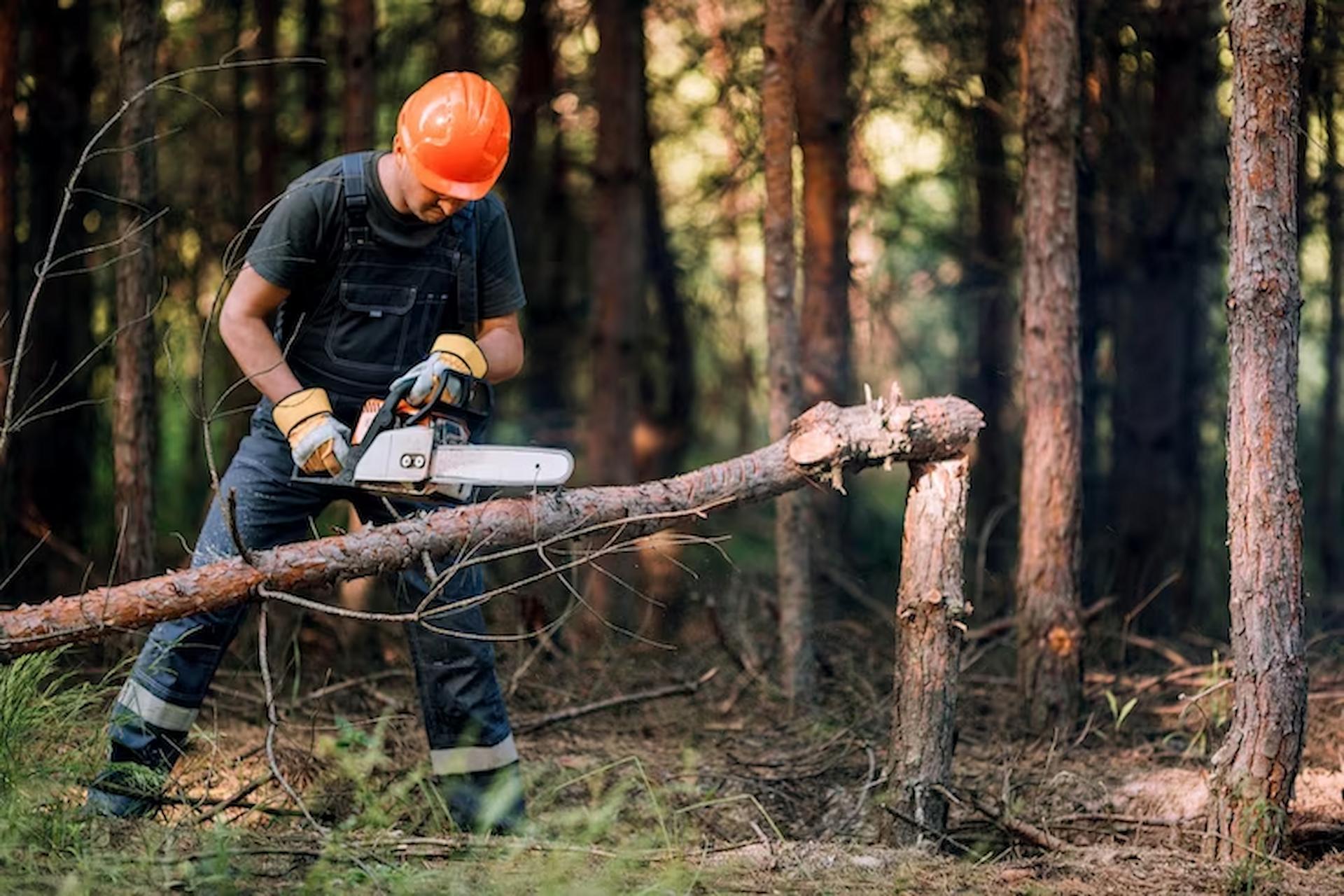
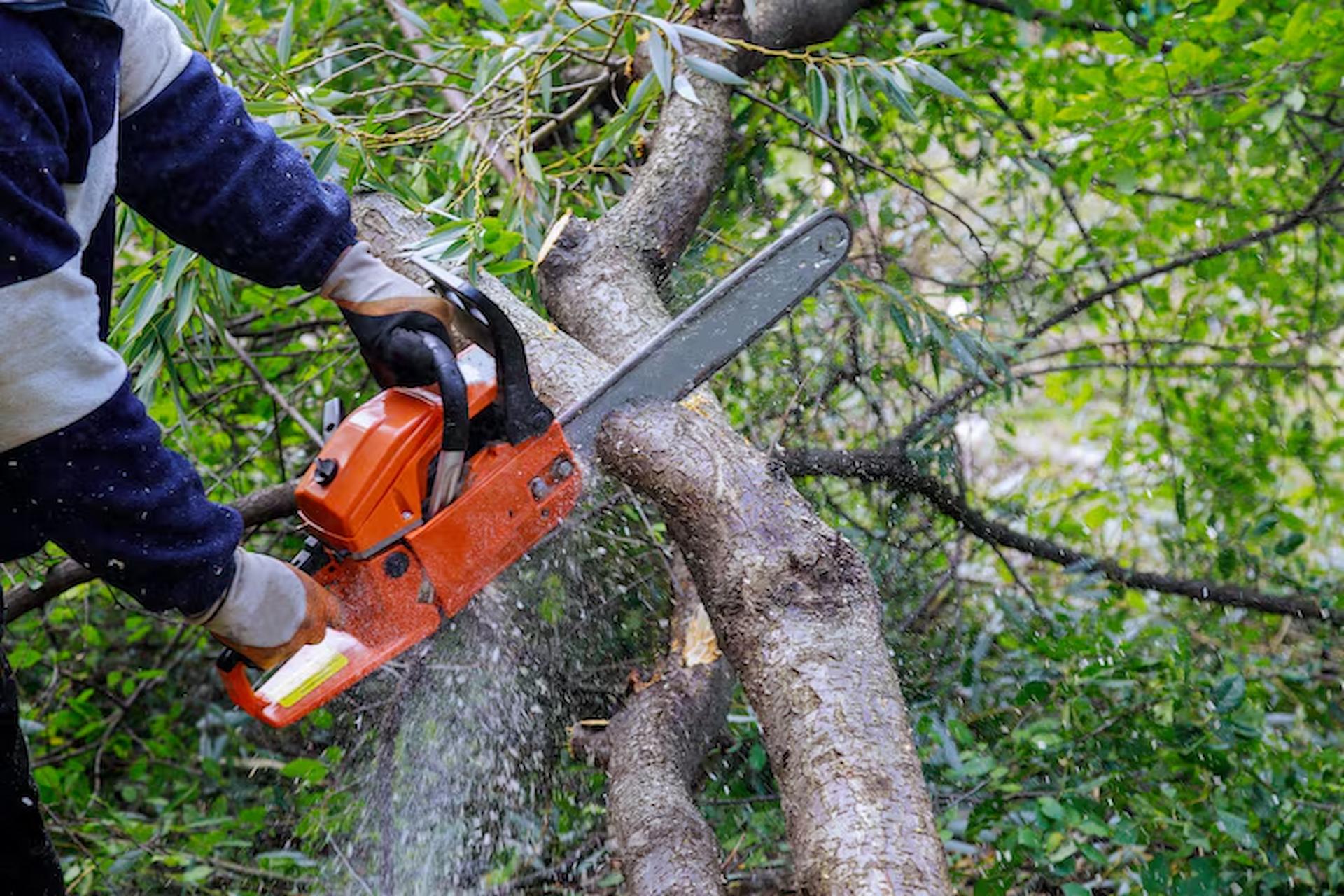
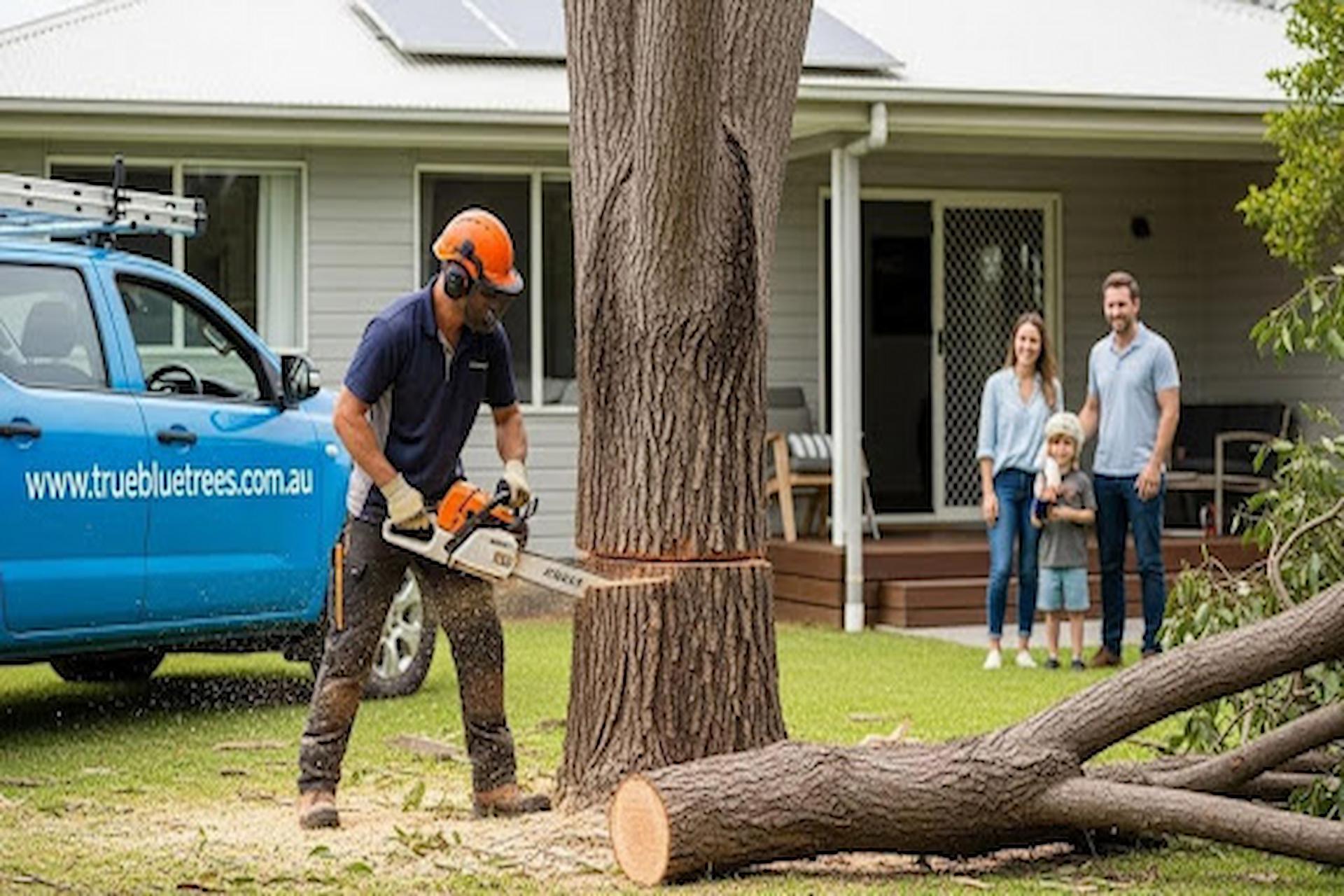
The tree is cut in sections to control the fall direction. The crew follows Australian standards for safe felling, using helmets, harnesses, and spotters.
5. Cleanup and Stump Management
After the tree is down, the wood is either chipped on site, hauled away, or left for firewood. Stump removal options include grinding, chemical decay, or full excavation.
6. Post-Removal Care
If you plan to plant a new tree or garden feature, the soil may need aeration and compost. A local horticulturist can suggest native species that suit your climate and soil type.
Environmental Considerations
Native vs. Exotic Species
Australia has many native trees that support wildlife. Removing a native tree may affect local birds and insects. If a native tree is diseased, consider replacing it with another native species to keep the ecosystem balanced.
Recycling Wood and Biomass
Many councils encourage recycling of tree waste. Wood can be turned into mulch, compost, or bio-fuel. Ask your removal service if they offer a recycling program.
Carbon Footprint
Tree removal does release stored carbon, but planting new trees quickly offsets the impact. Choose fast-growing, low-maintenance natives to restore carbon storage.
Frequently Asked Questions
Questions and Answers: Common Questions About tree removal in Australia
Do I need a council permit to remove a tree in Australia?
Yes, most Australian councils require a permit for trees over a certain size, usually measured by diameter at breast height. The exact threshold varies by state and local area, so check your council’s website or contact them directly.
How much does a typical tree removal cost in Australia?
Costs depend on tree size, species, location, and access. Small residential trees may cost $300-$600, while large, complex jobs can exceed $2,000. Always ask for a written quote that includes permit fees and cleanup.
Can I remove a tree myself, or do I need a professional?
While you can cut small, low-risk trees yourself, most tree removal jobs require a licensed arborist. Professional crews have the equipment, insurance, and knowledge to follow Australian safety standards.
What happens to the stump after a tree is removed?
Stumps can be ground down, chemically treated, or fully excavated. Grinding is the most common method and leaves a shallow hole that can be filled with soil for planting.
Are there any trees that are protected in Australia?
Yes, many native species, especially those listed under state heritage or environmental legislation, are protected. Examples include certain eucalypts, banksias, and rain-forest trees. An arborist can confirm if a tree is protected before you proceed.
Conclusion: Your Path to a Successful tree removal in Australia
Tree removal is a key part of home improvement in Australia. By understanding local regulations, choosing a qualified service, and following a clear step-by-step process, you can protect your property, stay within the law, and keep your garden healthy. Remember to check council requirements, get a professional assessment, and consider recycling or replanting to support the environment. With these steps, you are ready to manage any tree removal project confidently and safely.
For more detailed advice, local provider lists, and easy permit guides, visit truebluetrees.com.au. Your home improvement journey starts with the right information and the right partner.